

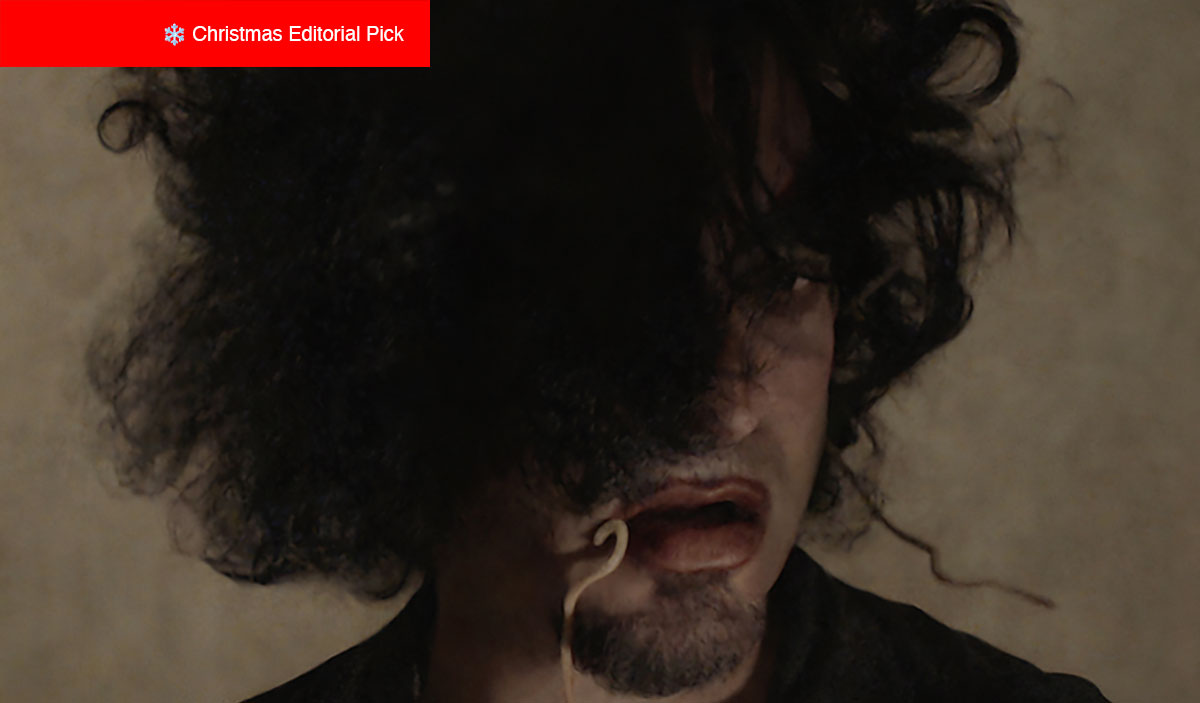
Adamo Macri doesn’t approach art from a place of comfort. He was born in Montreal in 1964 and studied at Dawson College, where he immersed himself in commercial art, photography, drawing, fine arts, and art history. Those early foundations didn’t pull him toward one path but opened many. Today, he moves through sculpture, photography, video, painting, and drawing as if each form is simply another door to open. His work feels like an ongoing inquiry into what lives beneath the surface—identity, fear, duality, memory, and the quiet tension between what we think we know and what lies behind it.
Macri’s practice is shaped by ideas more than materials. Sculpture remains his central axis, but his larger interest is in transformation. He looks at the self as something fragile, shifting, and layered, always in the process of breaking apart and re-forming. His work doesn’t chase beauty. It doesn’t soften anything. Instead, it holds space for isolation, rebirth, and truth—the uncomfortable kind that doesn’t arrive clean or resolved. When you spend time with his art, you get the feeling that you’re descending inward. He strips away the surface until only the psychological terrain remains.
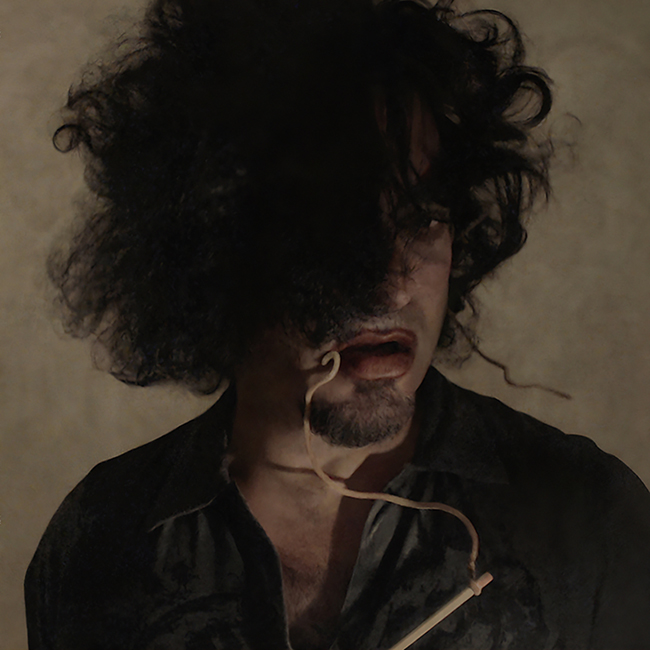
That inward descent is especially clear in his 2017 photographic work Cursive Penmanship and the Misfortunes of Virtue. It’s a square format—63.5 by 63.5 centimeters—tight, compressed, and visually confined. That square becomes more than a frame. It’s a cell window. A small opening into a closed world. Macri has said he is drawn to darker themes, the kind that carry intrigue and fascination. In this work, he turns directly toward Marquis de Sade and Justine, Sade’s infamous story of suffering, moral conflict, and the collapse of virtue under relentless cruelty.
Macri doesn’t illustrate the narrative. Instead, he distills it down to a psychological state. He speaks of the burden of suffering, the weight of relentless distress, and the persistence of madness pressing inward from all sides. In the photograph, everything feels tight—emotionally, visually, and symbolically. The confinement is part of the point. It speaks to the idea of a mind locked inside its own anguish, without reprieve. It mirrors Sade’s own life: long years in prisons and asylums, writing through the bars, wrestling with his obsessions and philosophies. At the same time, it echoes Justine’s own descent, her repeated attempts to cling to virtue while the world strips it from her.
Macri merges the creator and the created—the author and his tragic heroine—into one troubled presence. In doing so, he captures a complete arc: suffering imposed, suffering internalized, and suffering examined. It becomes a conversation between identity and narrative, between the maker and the thing made. Macri is not interested in retelling Sade’s scandals or dramatizing the violence. Instead, he interprets the psychological structure beneath them: the tension between desire and dread, the conflict between virtue and corruption, the collapse of hope under repeated blows.
To understand the piece, it helps to look briefly at the story that inspired it. Justine follows a young woman who chooses virtue at every turn, only to meet cruelty wherever she goes. Her life becomes a cycle of trust, betrayal, violation, and escape. She seeks shelter in monasteries, homes, and courts, only to face new horrors every time. Meanwhile, her sister Juliette, who embraces vice, flourishes. It’s a narrative built on contradiction—virtue punished, corruption rewarded, and morality turned inside out. The ending is abrupt and merciless: Justine is struck by lightning and dies, while her sister retreats into spiritual reflection.
It’s a brutal story, but Macri is not glorifying its extremes. He’s looking at what it reveals about human nature. He’s exploring the places where moral clarity erodes, where the mind tries to hold itself together under pressure, where identity becomes shadowed by circumstance. In his photograph, the square frame becomes a stage for this collision. It holds the tension between the creator who imagined cruelty and the character who endured it. It also holds the artist himself, who steps into the psychological weight of the narrative and uses it as material.
Macri’s broader practice often circles around these kinds of tensions. He’s drawn to subjects where the boundaries of self feel unstable—moments of transformation, distortion, or emotional fracture. His art is not shy about discomfort. He embraces the darker corners of the human experience, not for shock but for truth. He seems to believe that the mind reveals itself more clearly in struggle than in calm.
Cursive Penmanship and the Misfortunes of Virtue becomes a clear example of what Macri does best. He takes a historical narrative, a philosophical conflict, a psychological burden, and compresses them into one distilled image. It’s a work about suffering, but it’s also about identity—how it forms, how it breaks, how it absorbs the weight of experience. He brings the viewer into a space that is uneasy, quiet, and charged with tension. And in that tension, he finds something honest.
Macri’s art avoids easy conclusions. Instead, it asks you to sit with the darker parts of existence without looking away. In that sense, his work is less about the stories he references and more about the psychological truths he uncovers along the way.
