
L. Scooter Morris makes artwork that behaves like a presence in the room. She calls herself a sensory illusionist, and that description fits: her practice lives in the gap between what you think you’re seeing and what your body registers before you have the words. Morris builds “Sculpted Paintings” that refuse to stay quiet on a wall. They push forward and pull back. They catch light, swallow it, and send it back at a new angle. Up close, you notice the physical work—acrylic layered with mixed media, edges that hold shadow, ridges that read like touch. Step back, and the piece changes again, almost like it’s recalibrating to your distance. She isn’t chasing surface polish for its own sake. She’s after a real response—an honest moment where the viewer feels contact, not decoration.
Morris’s work sits in a charged space between painting and object. The term “sculpted painting” is not a marketing phrase here. It’s a practical description of how she builds. Her surfaces rise and recess. They interrupt the usual promise of a canvas and turn it into terrain. The result is a viewing experience that won’t stay still. From one angle, you see color relationships and compositional structure. From another, you see material decisions—how a ridge redirects light, how a groove holds darkness, how a rough patch refuses to blend into the rest. The artwork keeps changing as you move, and that movement is part of the point.
Texture, in Morris’s hands, is not decoration. It’s the main language. Acrylic provides speed, clarity, and punch. Mixed media adds friction and consequence. Together, they create surfaces that feel worked over, revised, insisted on. You can sense time inside them: layering, drying, re-layering, sanding back, building up again. That physical labor matters because it makes the artwork feel like something that has been through something—something made, not printed; something constructed, not merely placed.
Light is an active collaborator in her practice. These pieces don’t just “reflect.” They react. A raised section might flare when the light hits it, then flatten into shadow when you shift a few inches to the side. That change gives her work a quiet drama. It’s not theatrical. It’s perceptual. Morris turns the room into part of the artwork, because the room’s light and the viewer’s motion complete what the surface is trying to do.
Her titles often anchor the work to social realities. She doesn’t use language as an afterthought; she uses it as a directional tool, aiming the viewer toward specific tensions—identity and label, belonging and exclusion, power and vulnerability. Abstraction, for Morris, isn’t escape. It’s concentration. She compresses big ideas into a sensory experience and lets the viewer feel the pressure rather than read a caption.
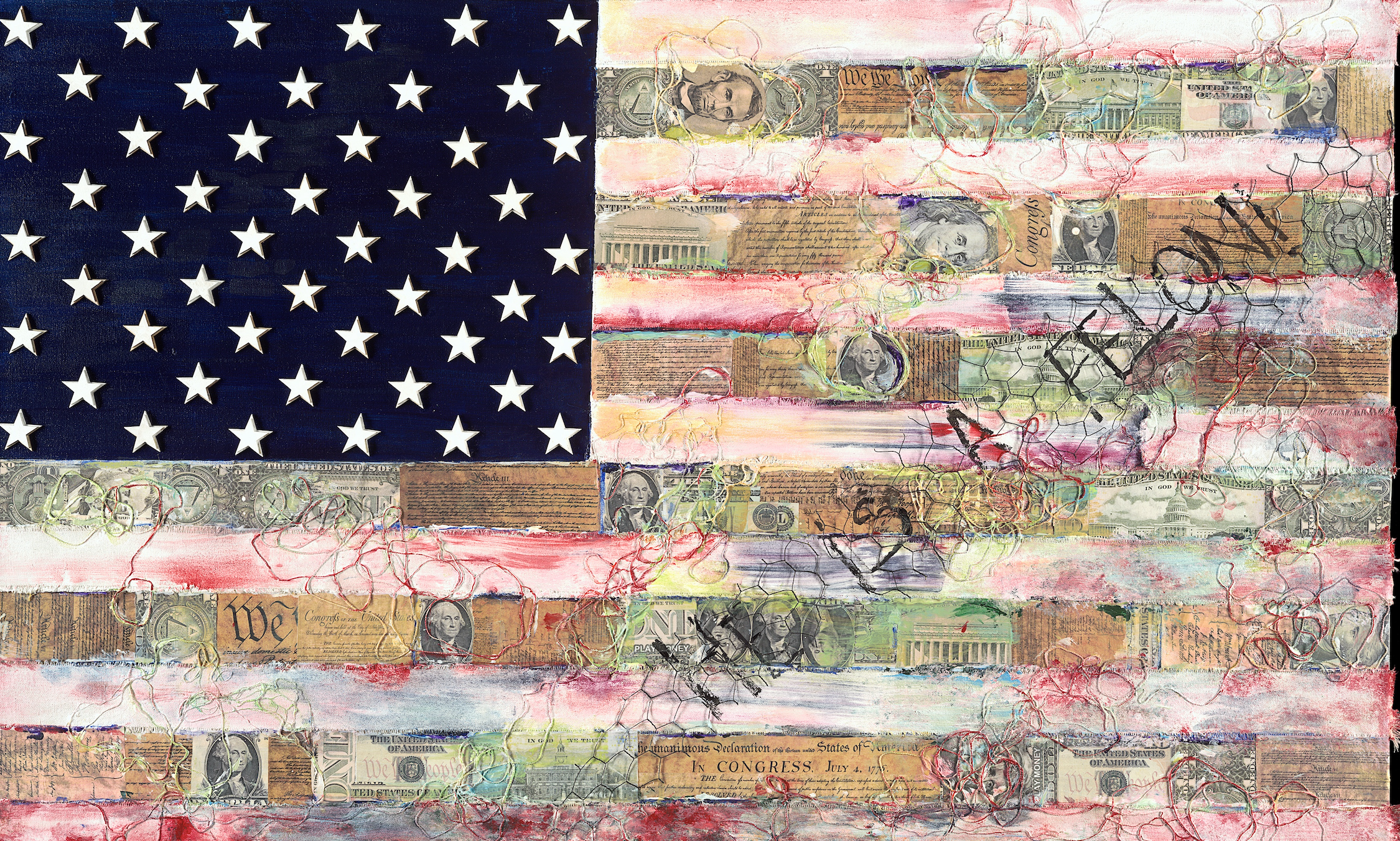
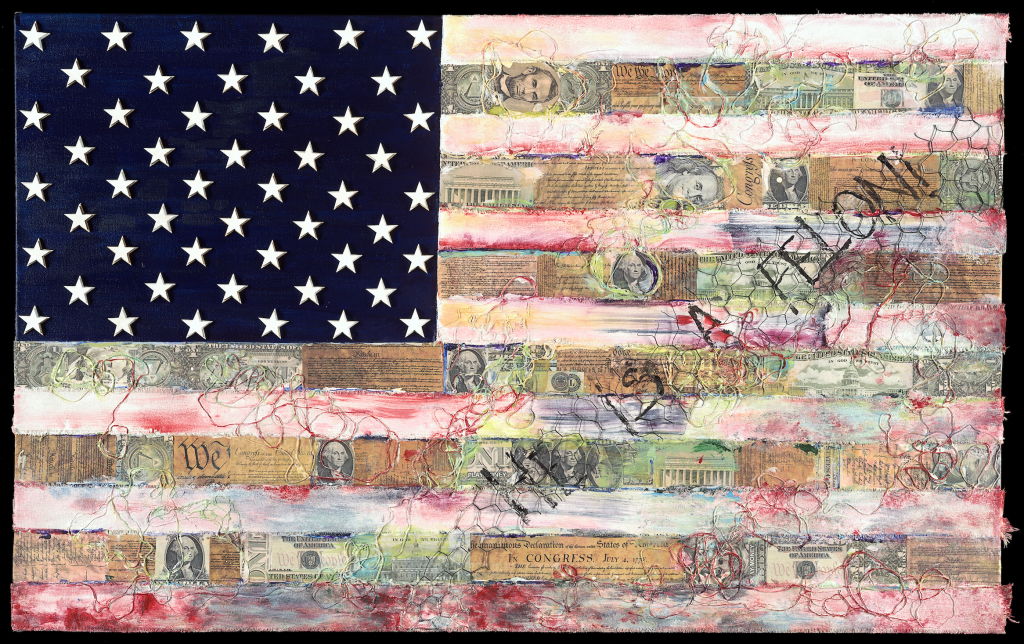
That approach becomes especially clear in We Are The People (2025), an acrylic and mixed media work measuring 60” x 48”. The scale matters. It places the piece in direct conversation with the viewer’s body. You don’t glance at it and move on; it holds you. The phrase “We Are The People” carries civic weight, but Morris doesn’t treat it like a slogan. She treats it like a question with no easy answer. Who is included in “we”? Who gets pushed out? What does “people” mean when systems divide people into categories?
On the surface, the artwork reads like a constructed landscape. Built passages create highs and lows, like a map of pressure points. Light slips across raised areas and drops into recessed ones, and that shifting visibility mirrors the way public life works: some stories are highlighted; others are buried. The material layering feels like accumulation—experience stacked over time, arguments layered on top of history, ideals pressed against reality. There’s energy in the piece, but also restraint, as if the work is holding itself together while still showing the stress lines.
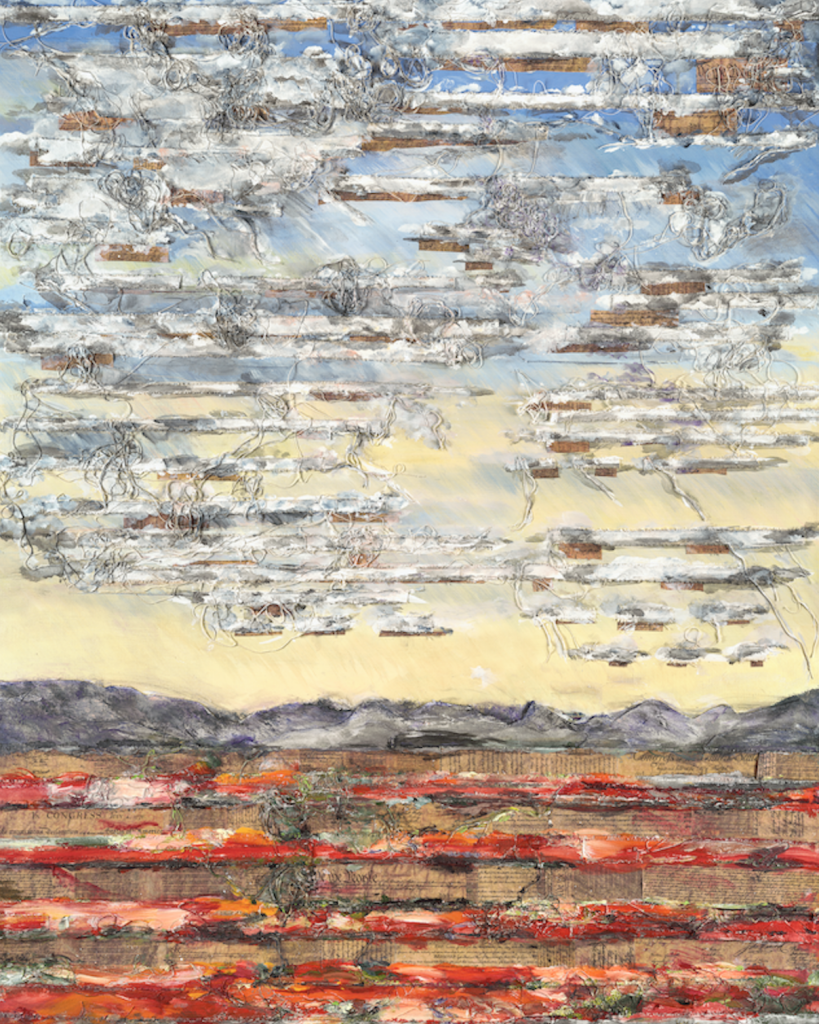
If We Are The People speaks with the voice of a collective, Felon (2025) speaks with the blunt force of a label. At 24” x 48”, the format is narrower and more vertical, like a posted notice or a marker you can’t ignore. The title compresses a person into a category. It sticks. It changes how others see you before you speak. Morris translates that social compression into a physical rhythm. The sculpted elements create interruptions—stops and reroutes for the eye—suggesting restriction and constraint without illustrating a literal scene. The surface behaves like memory: it doesn’t wipe clean. Marks remain. Layers accumulate. The work carries that feeling of permanence that labels can impose.
What makes Morris effective is that she doesn’t preach. She sets conditions for recognition. You’re invited to move, to look again, to notice how your own perception shifts—and how quickly you might judge based on what you think you see. Her art asks for attention, not approval. It asks you to stay with complexity without rushing to simplify it. In a world that trains us to scroll past nuance, Morris builds paintings that slow you down and make you feel your way through. That is the connection she’s after, and it’s why her work lingers after you turn away.
