

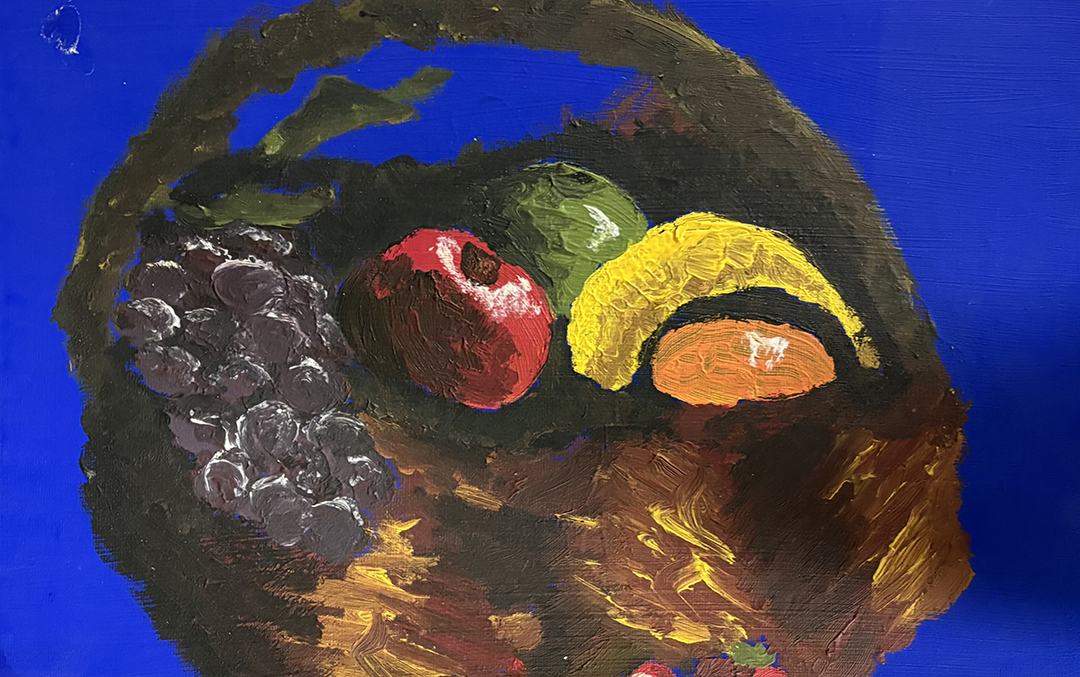
There are artists who work from observation, and others who work from sensation. Rebecca Navajas stands with the latter. Her paintings are not concerned with accuracy or careful representation. Instead, they move toward something less fixed and more immediate. Emotion becomes the starting point, and everything else follows. Color is not decorative. It carries weight. Gesture is not controlled. It reacts, shifts, and sometimes resists. In her work, nothing feels static. Each piece seems to hold a pulse, as if it continues to change even after it is finished.
Navajas approaches identity and experience as something layered rather than defined. Her paintings suggest that strength can exist alongside fragility, and that vulnerability is not something to hide but something to acknowledge. There is a quiet insistence in her work. It does not ask for attention loudly, but it stays with you. What she creates is not a copy of the visible world, but a translation of what it feels like to move through it.
Her work reveals itself most clearly when looking closely at individual pieces, where personal narratives are embedded within visual form.
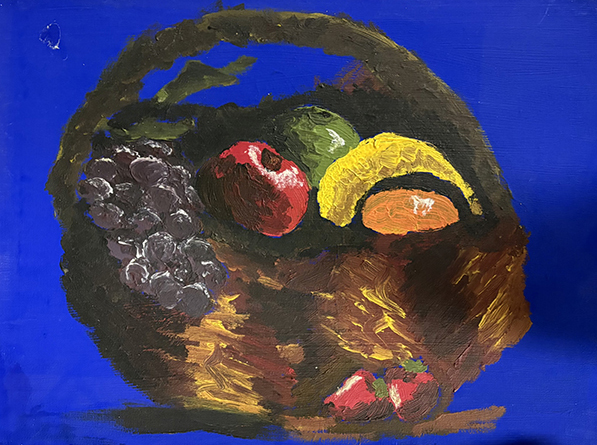
“Still life – still love” appears, at first, to belong to a long tradition. The front presents a basket of fruit. It feels calm, composed, almost timeless. The arrangement suggests care and attention, a quiet moment held in place. Fruit, often associated with abundance and life, sits as a symbol of something complete.
But this surface is only part of the work.
Behind the painting, hidden from immediate view, is something entirely different. A portrait of a couple who have broken apart. This dual structure shifts the meaning of the piece. What appears stable and whole on the front carries a different truth behind it. The work becomes less about objects and more about memory, concealment, and the way people hold onto what is no longer present.
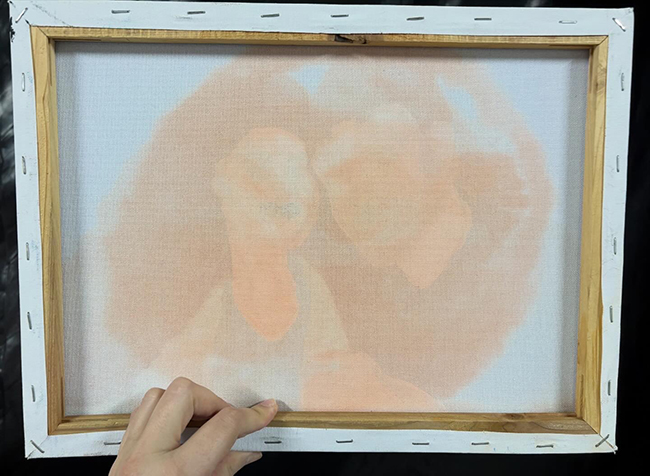
The separation between front and back is not just physical. It mirrors the way relationships can exist in layers. What is shown to the outside world can remain composed, even beautiful, while something unresolved sits beneath. Navajas does not dramatize this contrast. Instead, she allows it to exist quietly, trusting that the viewer will recognize the tension.
There is also something important in the choice of a still life format. Traditionally, still life suggests permanence, a frozen moment. By placing a hidden narrative behind it, Navajas disrupts that idea. The painting is no longer still. It carries movement across time. It suggests that what we see is never the full story.
“Still life – still love” becomes less about fruit and more about absence. It asks what remains after something ends, and how those remnants are stored, hidden, or reshaped.
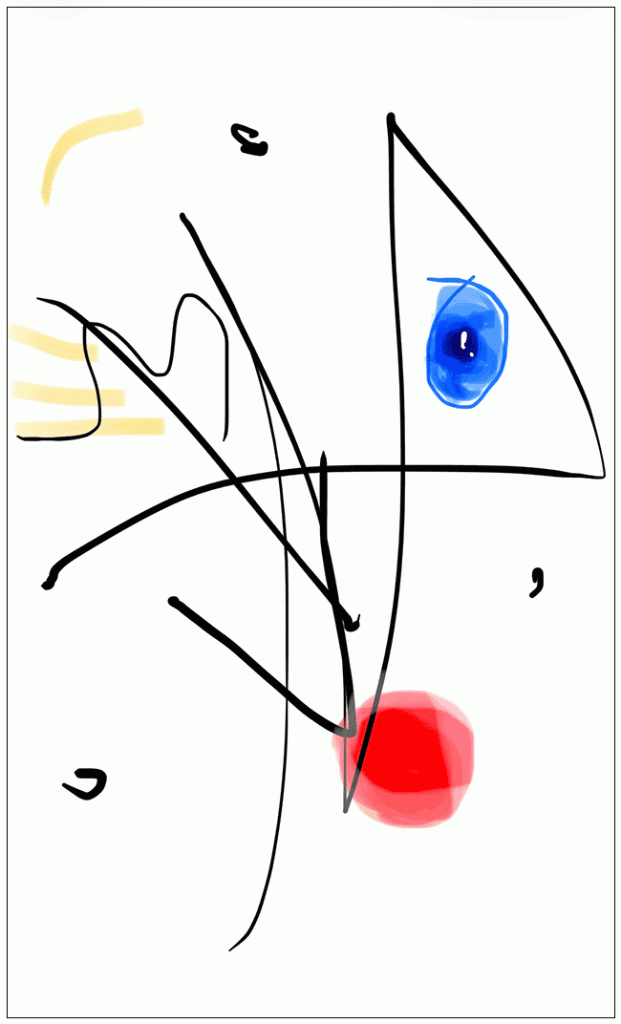
In contrast, “Dad” moves in a more immediate direction. Created as a rapid sketch on an iPhone during a flight, the work carries a different kind of energy. It is quick, direct, and unfiltered. There is no extended process, no layering over time. Instead, it captures a moment of realization as it happens.
The subject is deeply personal. The piece reflects a recognition of her father as a guiding force, described as both a source of light and a kind of internal compass. The reference to the North Pole suggests direction, stability, and something constant in a shifting environment. It is not just about admiration. It is about orientation, about knowing where you stand because of someone else’s presence in your life.
The use of an iPhone as the medium is significant. It removes distance between thought and image. There is no preparation, no formal setup. The drawing exists as close as possible to the feeling that produced it. This immediacy gives the work a certain clarity. It does not attempt to refine or polish the idea. It allows it to remain raw.
Visually, the piece likely carries the qualities of speed. Lines may feel loose, forms may not be fully resolved, but that incompleteness becomes part of its meaning. It reflects how understanding often arrives suddenly, without structure. The work holds onto that moment rather than reshaping it into something more controlled.
What connects both pieces is Navajas’ interest in what sits beneath the surface. In “Still life – still love,” the hidden portrait changes how the visible image is understood. In “Dad,” the simplicity of the sketch carries a deeper emotional weight. In both cases, the work does not rely on complexity of technique. It relies on clarity of intention.
Navajas seems less interested in creating images that impress and more focused on creating images that reveal. Her work moves between what is seen and what is felt, often allowing those two states to exist side by side. There is no need to resolve them.
Instead, she leaves space for contradiction, for quiet tension, and for the kind of understanding that does not arrive all at once.
