

Stuart Beck, born in 1967 in Lancashire, UK, found his way into painting through his father’s encouragement. Art was never something distant or lofty—it was part of everyday life. That early exposure shaped his path. Beck eventually moved toward abstraction, but always kept a connection to real places and real things. His work might not show literal landscapes or figures, but it reflects what he’s taken in: the surfaces of buildings, the wear of time, the way nature creeps in and out of the built world. His paintings are like quiet observations—things most of us walk past without noticing.
There’s no grand narrative in his art. Instead, Beck offers visual moments that sit somewhere between harmony and disrepair. His work doesn’t resolve conflict. It holds it. You can feel the tension between the natural and manmade, between permanence and erosion. And somehow, through that tension, he finds something still and worth holding onto.
A Closer Look at the Work
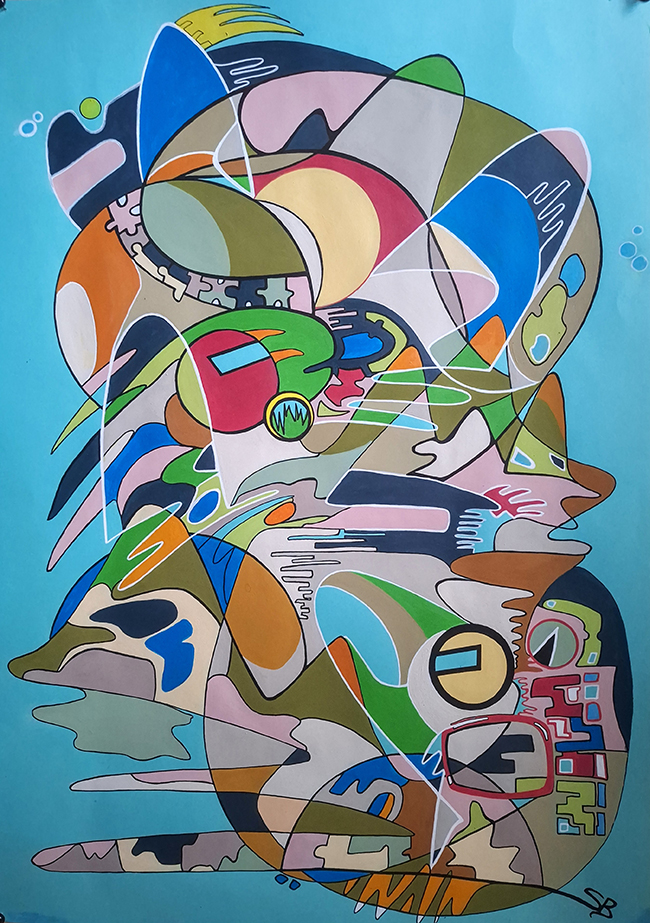
In The Puzzling World, Beck explores a sense of unraveling. The painting, done in acrylic on paper, continues the ideas behind Human Kind, Destroyer of Worlds. It doesn’t give you specifics—there are no recognizable objects, no words—but you feel a kind of fracture running through it. Shapes don’t line up. The composition feels unsettled. Color isn’t comforting; it creates more questions than answers. It’s a visual take on disconnection—our distance from the earth and from each other.
Beck doesn’t point fingers. He just shows the mess we’re in. He talks about how we’ve locked ourselves into a dystopia of our own making, so tangled in made-up systems that we forget the basics: we live on a shared planet, and what we do affects it—and each other. The Puzzling World doesn’t offer a fix. It just asks us to look at what’s there, and what we’ve chosen not to see.
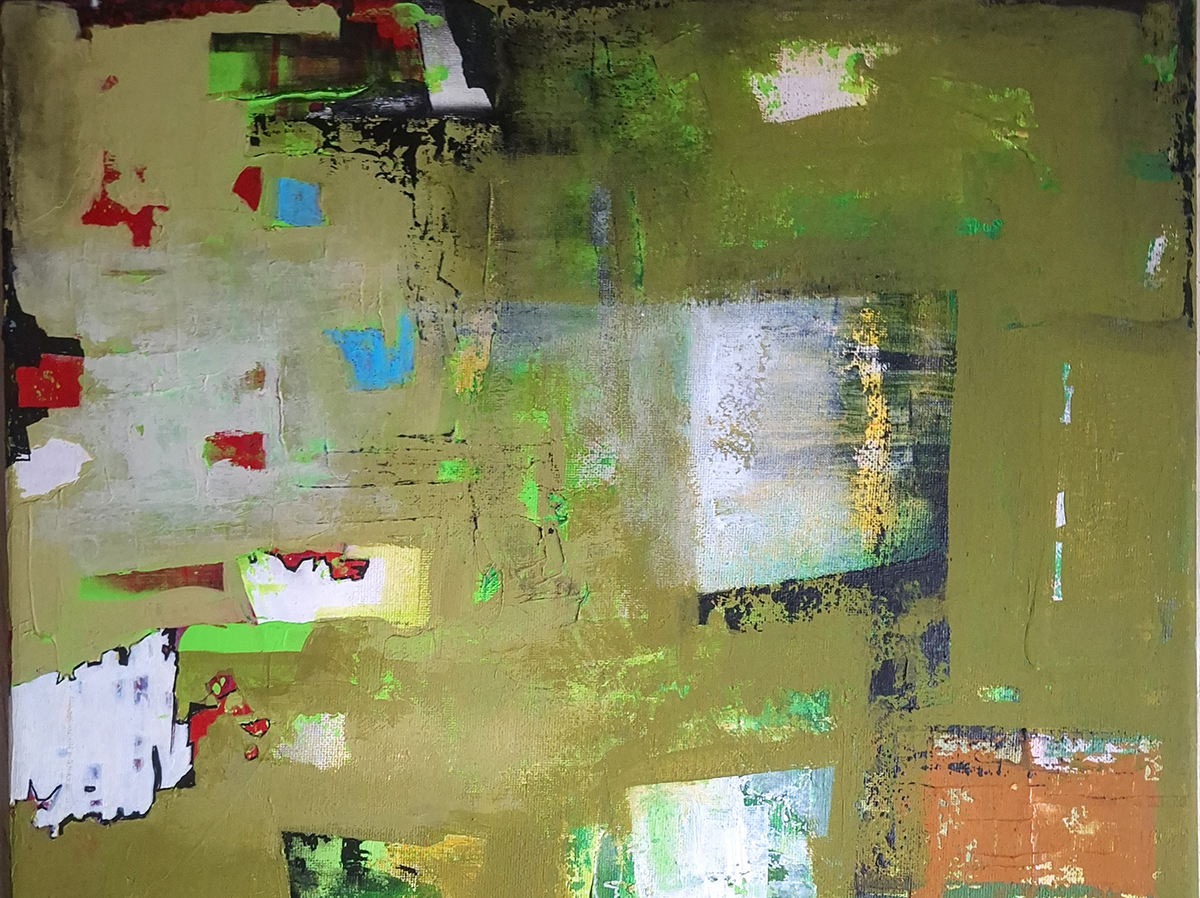
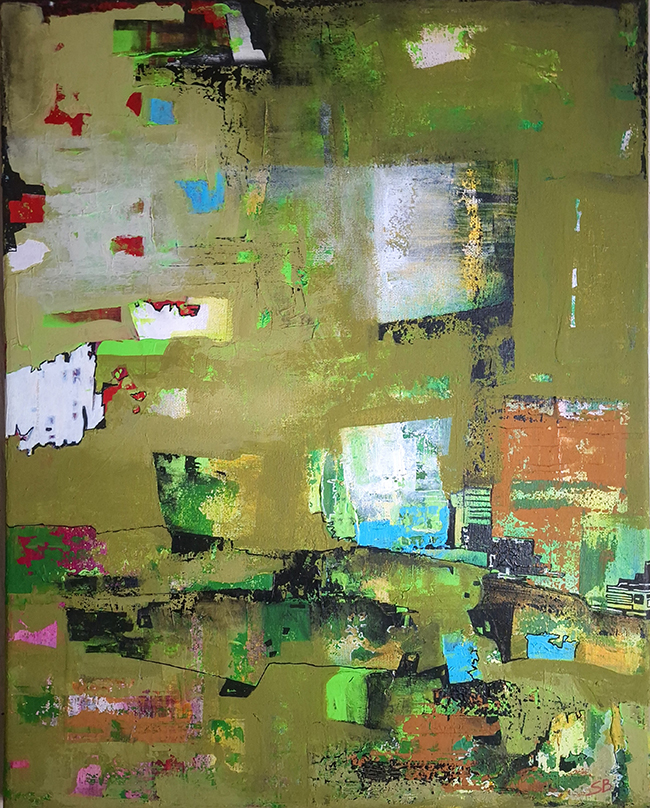
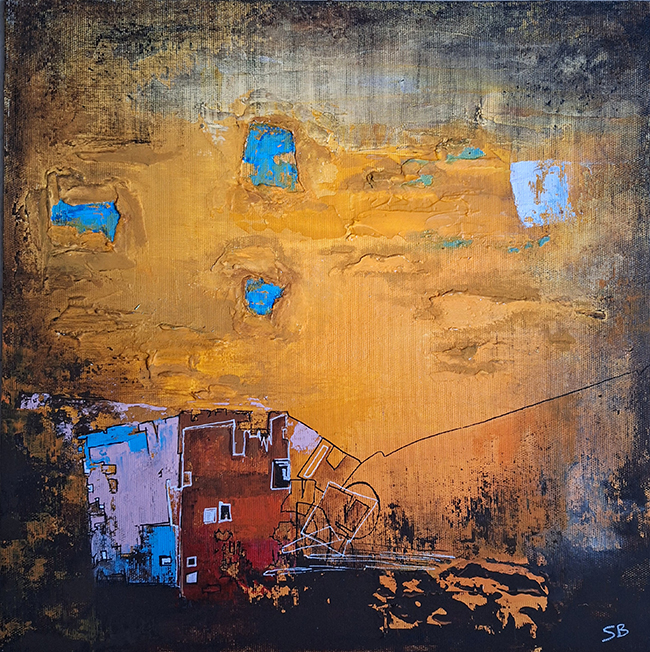
The tone shifts in Untitled No.25 and Untitled No.26. These aren’t global in scope. They’re personal. Both works take inspiration from aging surfaces—walls, objects, structures worn down by time and weather. No.25, painted on canvas board with a yellow background, and No.26, with its green canvas, continue a visual thread seen in earlier works like No.18 and No.24. Beck is drawn to the quiet changes that happen when something is left alone long enough to fade and break down.
He isn’t chasing ruins for their drama. He’s looking at how time reshapes what we make—how chipped paint, rust, and fading walls hold their own kind of beauty. These works speak more through tone than subject. They carry mood. The yellow in No.25 doesn’t shine—it’s muted, like paper left in the sun. The green in No.26 feels organic, like moss or oxidized metal. They aren’t bold. They stay with you because they’re subtle.
Beck has mentioned how he likes to blend the natural and artificial. You see that clearly here. These paintings don’t separate what’s manmade from what’s organic. They let both exist in the same space. There’s no clear boundary—just a soft transition from one into the other, like ivy creeping across a fence. In that space, Beck finds a kind of honesty. Things decay. That’s not failure—it’s part of the life cycle.
He keeps coming back to that idea: nothing stays new. Everything wears. And there’s beauty in that. Whether he’s painting disconnection on a global scale or pointing to the quiet breakdown of everyday objects, Beck gives it the same care. He paints slowly, with attention, letting each layer speak for itself.
He’s not asking for interpretation. He’s not shouting a message. He’s just looking closely and painting what he sees. There’s a calmness in that approach. His work doesn’t pull you in with drama—it gives you space to think, to pause, to really look.
Stuart Beck doesn’t offer resolutions in his art. What he does offer is a moment—an invitation to sit with things as they are, not how we wish they were. In his paintings, you don’t get easy meaning. But you do get something real. Something that lingers.
