

Tinashe, born in 2001 in Mutare, works from a place of movement. His life has unfolded between Zimbabwe and the United States, and that distance shows up in how he sees the world. His work sits at the intersection of identity, culture, race, and gender, but it does not explain these ideas in a direct way. Instead, he builds images that feel lived in. There is memory in them. There is tension, but also care.
Growing up across two environments shaped his sense of belonging. It is not fixed. It shifts. That shifting becomes part of the work. Tinashe does not try to resolve it. He lets it remain open, layered, and sometimes uncomfortable. His paintings carry traces of home, displacement, and return. They are less about answers and more about recognition. You look at them and feel that something familiar is being held there, even if you cannot name it right away.
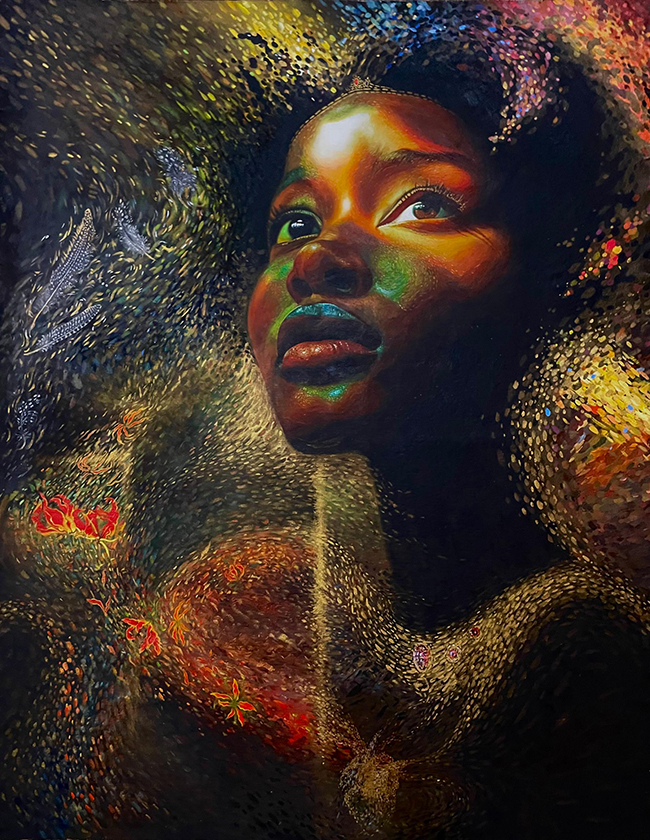
“The Smell After Rain” is grounded in memory. Not a single memory, but something older. Something carried through generations. The painting centers on a woman who feels inseparable from the land around her. She is not standing on it. She is part of it.
The moment comes after rain. That detail matters. In Zimbabwe, rain is not casual. It signals renewal, survival, continuation. The scent rising from the ground is not just physical. It carries history. Tinashe leans into that idea. The earth is not background. It is presence.
There are references that sit quietly but clearly. Mbira music. Mango trees. Hands in soil. These are not decorative elements. They are anchors. They place the work within a lived cultural rhythm. The mention of magwere, planted into the ground, ties the body to labor, to care, to continuity. It is not romanticized. It is real.
The woman’s body reflects this connection. Gold and rain sit on her skin, but it is the red soil that defines her. She becomes “wet red soil,” which shifts her from subject to symbol. Not in a distant way. In a grounded one. She represents growth after drought. Not just agricultural drought, but emotional and generational strain.
There is also a clear line drawn to women before her. Mothers. Grandmothers. Women who carried weight and still created futures. The image of braiding becomes important. It suggests care, but also structure. Something passed down, shaped by hand.
The tone of the work is quiet. Not passive. Just steady. The storm has passed. What remains is breath. The earth taking in what it needs. The idea of home appears here, but not as a location. More as a recognition. A knowing that identity is tied to origin, even when life moves elsewhere.
Tinashe does not overstate any of this. He lets the imagery hold it.
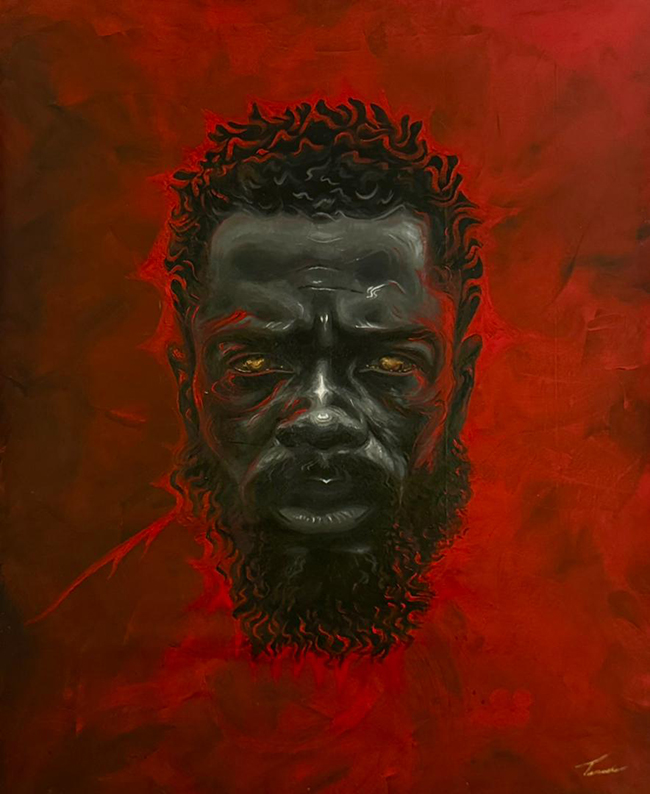
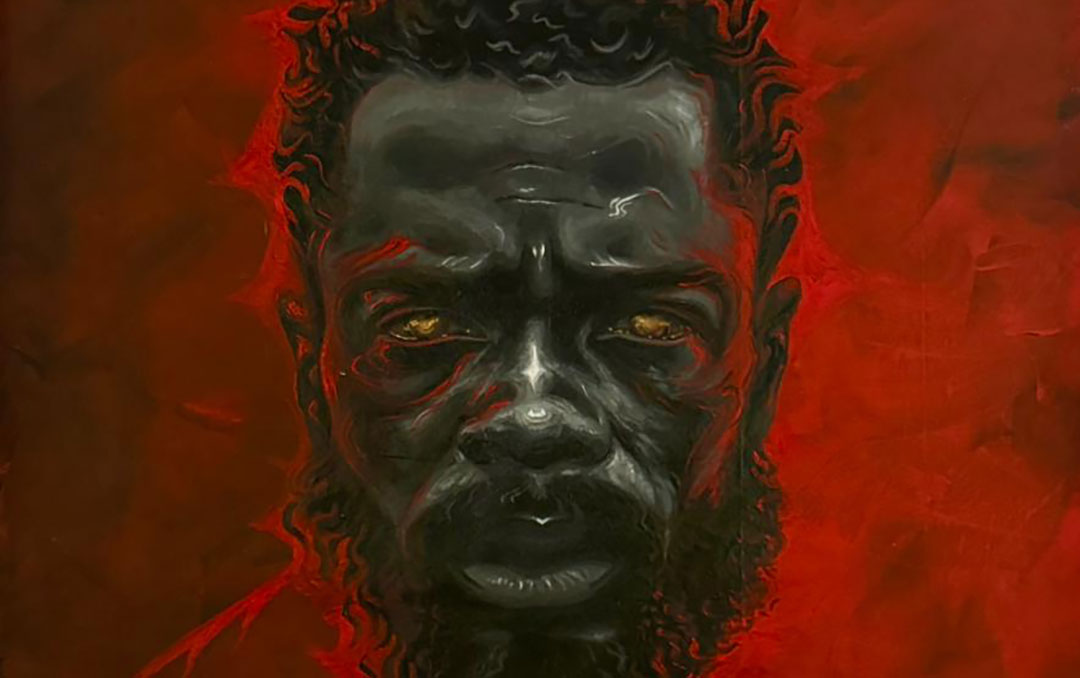
If “The Smell After Rain” is about connection and grounding, “man” moves in the opposite direction. It is about containment.
The figure here is not at peace. He is holding something in. The painting makes that clear right away. There is tension in the posture, in the stillness. It is not calm. It is control.
Tinashe builds the figure as someone shaped by expectation. The phrases tied to masculinity are present, even if not written on the surface. Be strong. Don’t cry. Endure. These are not abstract ideas. They sit in the body. They create pressure.
The red background reinforces that. It reads as emotional weight. Not just anger, but accumulation. Generational pressure layered over personal experience. The figure is standing inside that space, not outside it.
What stands out most is the silence. The idea that expression is blocked. A scream that never leaves. That kind of silence is not empty. It is dense. It holds grief, fear, and restraint all at once.
The line about carrying love like a wound shifts the reading. It suggests that softness is present, but hidden. Treated as something dangerous. Something that cannot be shown. That creates a split. The exterior remains controlled, while the interior builds pressure.
The eyes interrupt that control. There is a flicker there. Not simple hope. Something more complicated. Rage mixed with tenderness. A refusal to fully shut down. That detail keeps the figure from becoming static. It suggests that something is still alive beneath the surface.
The work does not resolve the tension. It does not offer release. That feels intentional. Tinashe stays with the discomfort. He allows the viewer to sit with it.
The painting’s recognition through the Bests Art Awards adds visibility, but the core of the work does not depend on that. It stands on its own. Direct. Unfiltered.
Across both works, Tinashe keeps returning to the body as a site of memory and pressure. In one, the body merges with land and history. In the other, it absorbs expectation and silence. Together, they show a range. Not stylistically, but emotionally.
He does not try to simplify these experiences. He lets them stay layered. That is where the work holds its weight.
