

Pasquale J. Cuomo’s story begins with a teenager holding a camera without knowing he was opening the door to a lifelong pursuit. Born in the United States and shaped by more than fifty years behind the lens, Cuomo has traveled through the changing landscape of photography—film, digital, and everything in between. What started as a simple curiosity became a steady companion as he experimented across genres, traveled, and watched the medium reinvent itself again and again.
Cuomo is one of those photographers whose relationship with the craft feels stitched into the rhythm of his life. He remembers the smell of chemicals in darkrooms, the patience required for film, and the excitement of early digital shifts. Today, he draws from both worlds, carrying his history with him. His work reflects decades of trying, failing, refining, and returning to the simple joy of making images.
Pasquale Cuomo often talks about photography as something that stayed with him, no matter where his life moved. He didn’t start with a grand plan or formal structure. He simply picked up a camera as a teenager and kept going. Over time, he learned how light behaves, how film responds, how lenses shape emotion, and how the smallest adjustments can change everything. That early curiosity never faded; it just grew more layered as the years passed.
Cuomo’s work stretches across decades that saw photography reinvent itself. He began in the film era, when every frame required intention. Mistakes weren’t cheap, and learning happened slowly—one roll, one print, one adjustment at a time. When digital photography arrived, he explored it with the same curiosity, but he never abandoned film entirely. In fact, he has returned to it many times, drawn to its texture, its discipline, and the quiet satisfaction of creating something by hand.
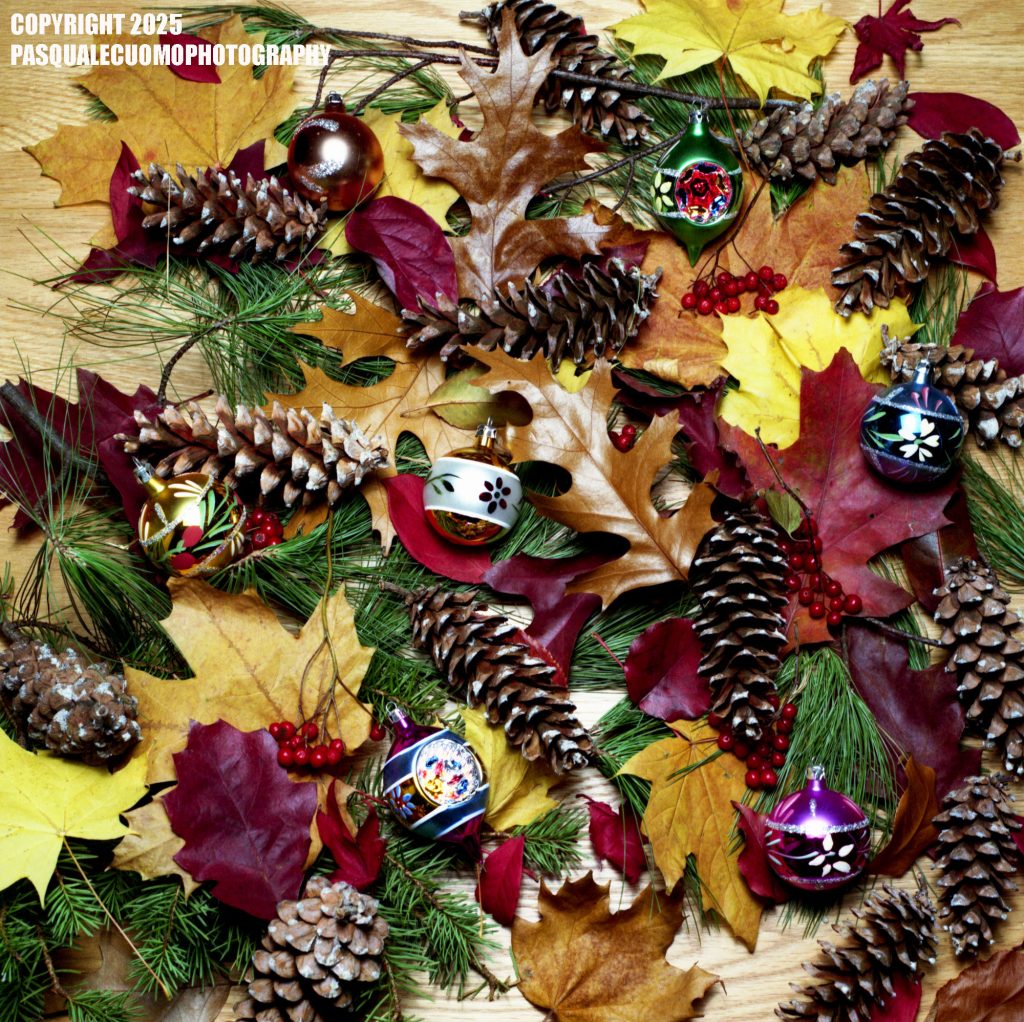
Among his many experiments and projects, one small still-life photograph—his only Christmas-themed image—sits in a special corner of his memory. It takes him back to his earliest years as a professional photographer, when he was still figuring out where he belonged and which direction the business might take him. He shot the photograph with his Hasselblad, using what he believes was the 120mm S-Planar lens. Even now, he recalls the details that mattered: the feel of the camera in his hands, the setup in front of him, and the mindset of a young photographer testing his abilities.
The film he used for this particular setup was VPL-120, a stock balanced for tungsten light—long discontinued. At the time, it was a practical choice for indoor studies, but looking back, it now reads like a small time capsule. It belongs to a period when photographers depended on the personality of each film type. You worked with its strengths, forgave its flaws, and sometimes discovered something unexpected. Cuomo treated this project as a learning exercise rather than commercial work. He wanted to understand product photography, even though he had no plans to specialize in it.
What makes this photograph meaningful is not a grand story but a simple one: it marked a moment when Cuomo pushed himself into an unfamiliar area. He didn’t often shoot products. His career would later move toward other subjects and interests, taking him far from the controlled world of still-life setups. But in these early days, he studied the process closely. He even kept detailed notes—lighting diagrams, exposure decisions, film considerations, and alternate versions. Somewhere, he believes, there is a box of slides that mirrors the same setup, though he hasn’t seen it in years.
This image represents a kind of quiet ambition. Cuomo didn’t need the shot for a client or assignment. He created it to teach himself something, to wrestle with the challenges that come with staged photography, and to test the boundaries of what he knew at the time. It reflects the type of learning that happens away from public view—hours of trial, error, and adjustment that form the invisible backbone of a career.
Even though business eventually took him elsewhere, he still remembers this photograph as one of the first times he approached his craft with a sense of purpose. It reminds him of who he was back then: a young photographer trying to understand how light wraps around objects, how different films translate color, and how the camera becomes an extension of the eye with enough practice.
Today, after more than fifty years behind the lens, Cuomo looks at this early Christmas still life with a mixture of nostalgia and appreciation. It’s a small piece of his long journey, but it carries the spirit of his early years—curious, methodical, and eager to learn. And it shows the simple truth that shaped his career: every project, even the quiet ones, becomes part of the story.
