


Based in Las Vegas, Pam Fields is an erotic art photographer whose work centers on the body, personal freedom, and emotional connection. She photographs women, men, and couples from around the world, creating images that balance sensuality with dignity and artistic restraint. Her distinctive use of illumination and darkness allows the human figure to appear gradually, often revealing only selected gestures, contours, and details. This approach gives her photographs an atmosphere of privacy and mystery. Fields carefully supports each person throughout the creative process, helping clients move beyond uncertainty and become comfortable in front of the camera. Her photographs have also been presented in galleries and art exhibitions. Alongside her photographic practice, Fields works as a speaker and educator, teaching others to create intimate portraiture with sensitivity, strong communication, and professional care. Her work expresses a clear conviction: the body should be acknowledged as it is, without shame or the expectation of perfection.
Fields treats erotic photography as a collaborative experience rather than a simple recording of physical appearance. Her subjects participate in determining how they wish to be represented. Some arrive with confidence, while others bring nervousness or doubts about their bodies. Fields creates an environment in which those feelings can be recognized without controlling the final image.
Her photography is interested in what happens when a person begins to relax and release the impulse to perform. A hand softens, a posture changes, or an expression becomes more natural. These subtle moments reveal something more compelling than a conventional pose. They suggest that sensuality can be quiet, thoughtful, playful, commanding, or deeply personal.
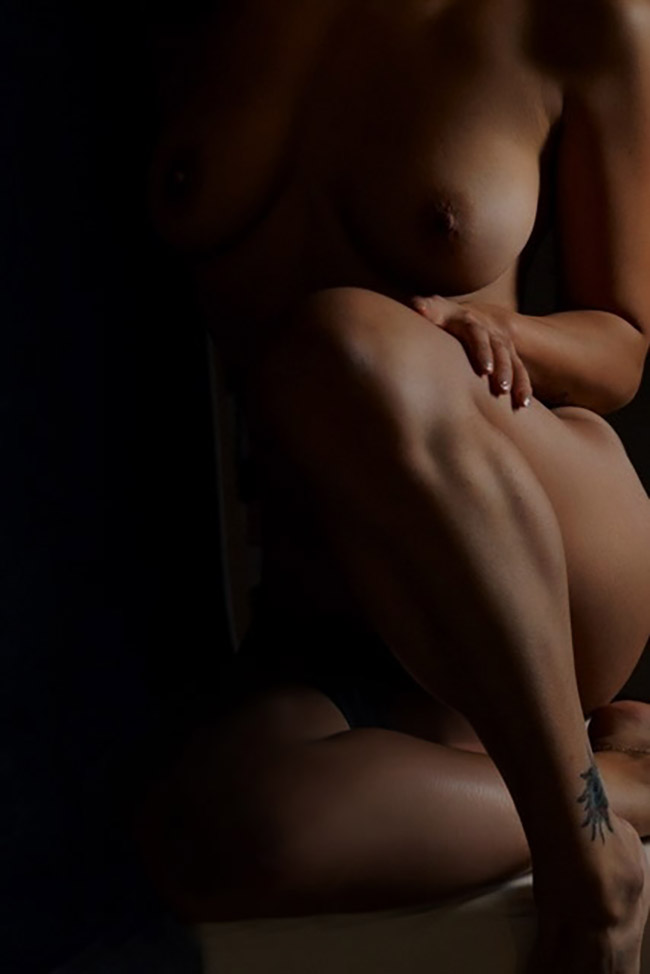
In In the Shadows, Fields uses darkness to turn partial visibility into the photograph’s central language. The seated figure appears against an almost completely black background. Warm light falls across the chest, hand, thigh, and lower leg, allowing the body to surface slowly from the surrounding shadows. Rather than presenting the entire figure at once, the photograph asks the viewer to notice separate areas and the visual relationships between them.

The subject’s folded posture introduces a sense of privacy. One leg crosses the composition while a hand rests gently against the skin. The gesture is calm and unforced, suggesting comfort within the body rather than awareness of an outside audience. A tattoo near the ankle offers a small sign of individuality, while the absence of the face keeps the subject’s larger identity private.
This concealment does not diminish the figure’s presence. It strengthens it. Fields shows that a person does not need to reveal everything in order to be fully represented. Darkness becomes a protective space, while light recognizes the parts the subject chooses to share. The image presents sensuality as an internal state rather than a display created for approval.
In His Hands introduces a different emotional rhythm. Here, Fields focuses on the closeness between two tattooed figures. Their bodies fill the frame, leaving little distance between the couple and the viewer. Their faces meet at the center of the composition as they approach a kiss, while their hands communicate tenderness, urgency, and trust.
One figure holds the other’s hair and supports her neck. These gestures create a clear sense of physical intensity, yet the photograph also carries gentleness. Fields captures intimacy as an exchange between two active participants. Neither person is treated as a decorative object. Their attention is directed toward each other, making the viewer an observer of a connection that already exists.
The subjects’ tattoos contribute strongly to the image. Butterflies, flowers, lettering, and numerous symbols cover their skin, forming intricate layers of color and personal history. The body becomes both the subject of the photograph and a surface already marked by experience. Fields does not explain the meaning of these images. She leaves their stories with the individuals who carry them.
Warm lighting emphasizes the contrast between skin, dark fabric, colorful ink, and blond hair. The surrounding shadows narrow the scene and create the feeling of a private world. Although the photograph is openly sensual, its emotional strength comes from closeness and mutual responsiveness. Desire appears through touch and attention rather than theatrical presentation.
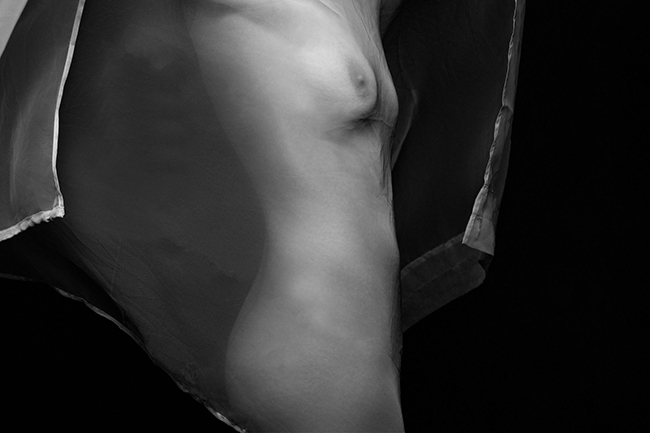
With The Hidden Line, Fields moves toward abstraction. The black-and-white photograph shows part of a torso framed by loose, translucent material. The body is recognizable, but the unusual cropping removes it from conventional portraiture. Curves, shadows, and tonal transitions become the primary subjects.
The fabric creates an irregular border around the figure, simultaneously covering, framing, and revealing it. Its rough edges contrast with the smooth contour of the body. Without color or a visible face, the photograph takes on a sculptural quality. It could be understood as a study of anatomy, movement, or the meeting point between a physical form and the space surrounding it.
Together, these works demonstrate Fields’ understanding that intimacy depends as much on what is withheld as on what is shown. Her shadows are not empty areas. They establish privacy, mood, and psychological depth. Light becomes selective and purposeful, directing attention without demanding complete exposure.
Fields also recognizes the responsibility involved in photographing people at their most vulnerable. The process requires more than an attractive composition or technical control of a camera. It requires trust, patience, clear boundaries, and genuine respect for the person being photographed. Through her educational work, she encourages other photographers to bring this emotional awareness into their own sessions.
Fields’ images ultimately speak about choice. Her subjects choose how to occupy the frame, what to reveal, and how they want their bodies and relationships to be remembered. Through light, shadow, and attentive collaboration, she transforms intimate portraiture into a record of confidence, desire, and self-recognition.
