

Ted Barr is an artist who was born in Neodar, Romania, near the shores of the Black Sea. When he was four years old, his family moved to Israel. In 1975, he entered the Israeli army, where he served for twenty-six years in various roles, including regular soldier, officer, and reservist. In 1992, he completed his studies at the Israeli Battalion Commanders’ Academy and went on to serve as a deputy battalion commander with the rank of Major.
After completing his compulsory service in 1980, Barr dedicated seven years to studying subjects that fascinated him, such as Symbolism, Buddhism, Ancient Egyptian culture, Numerology, and Kabbalah. He later pursued higher education in business, earning an MBA in marketing from Tel Aviv University in 1990.
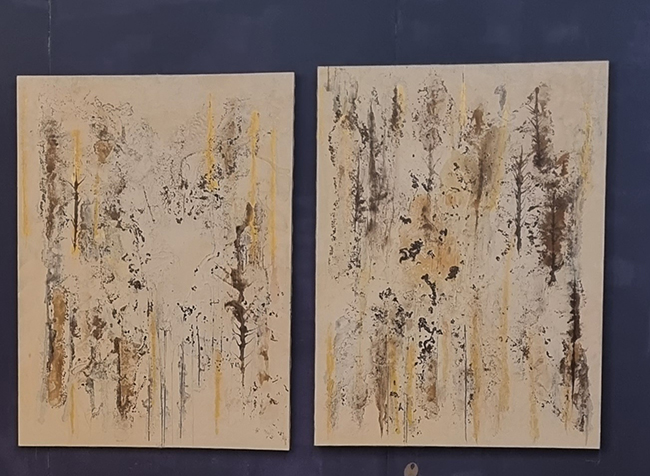
SuperNova Art Series
Regeneration Diptych
The SuperNova art series, and particularly the Regeneration Diptych, stands as a meditation on transformation—both witnessed and imagined. The work originates from a moment of unexpected confrontation while crossing the snow-covered Alps. Amid the stillness and white expanse, Barr encountered a forest fire burning through the cold landscape. Trees stood aflame against the snow, appearing less like objects consumed by destruction and more like living torches caught in a state of transition. This striking contradiction—fire within snow—became the emotional and conceptual spark for the series.
What stayed with Barr was not simply the visual drama of the scene, but the sense of passage it suggested. As wood shifted into smoke and ash, the forest appeared to move from a physical state into something less tangible—energy, memory, absence. This moment prompted broader reflection: on the course of human life, on mortality, and on what it means to leave the physical body behind. Rather than treating death as an end point, Barr began to consider it as a transformation, a release from form into another state of being.
At the same time, the forest itself offered a counterpoint to loss. Barr understood that what burns can also regenerate. Forests have an enduring capacity to return, to produce new growth from scorched ground. He made a quiet promise to revisit the same place in spring, to witness renewal firsthand—to see green life reclaim a space once marked by fire. That tension between destruction and regeneration forms the emotional backbone of Regeneration Diptych.
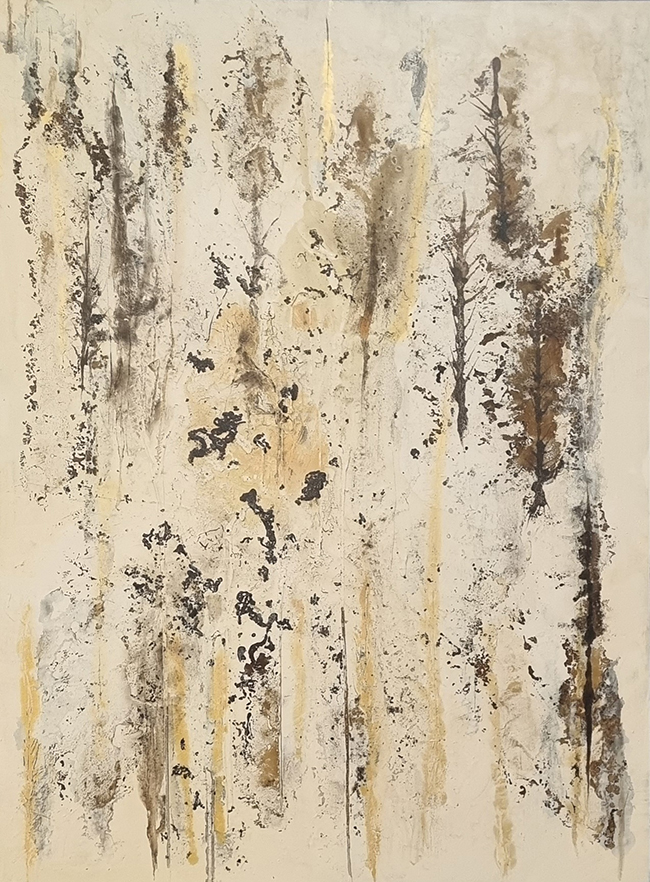
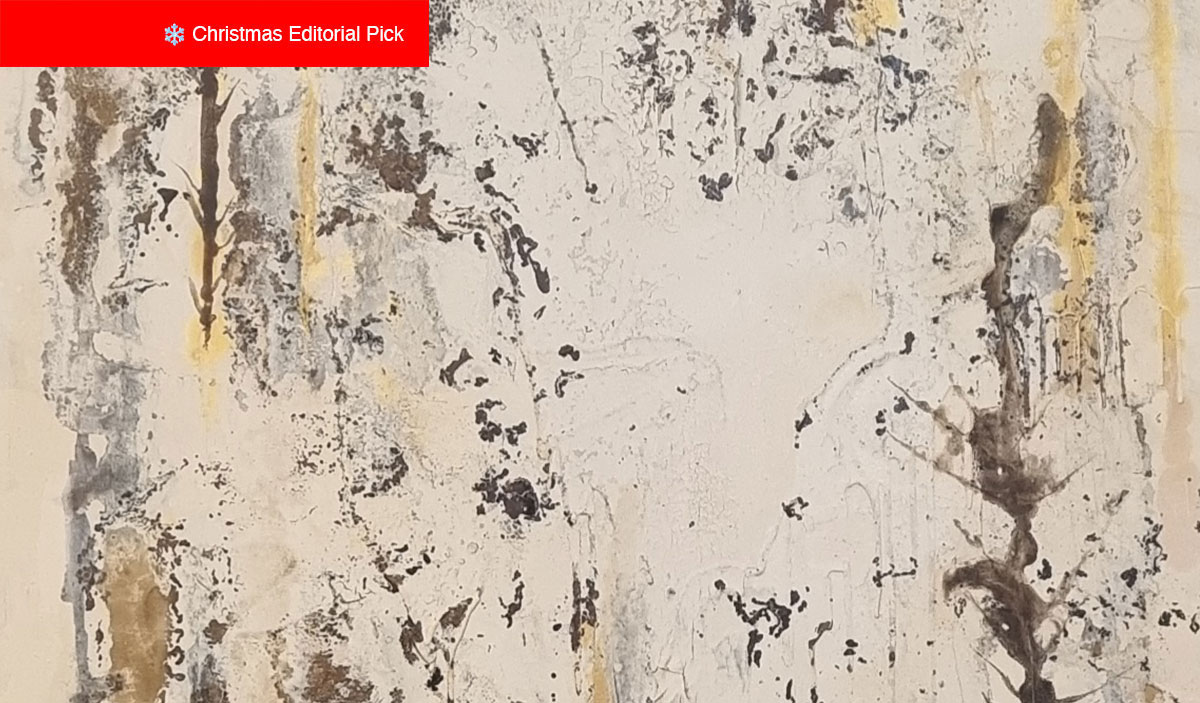
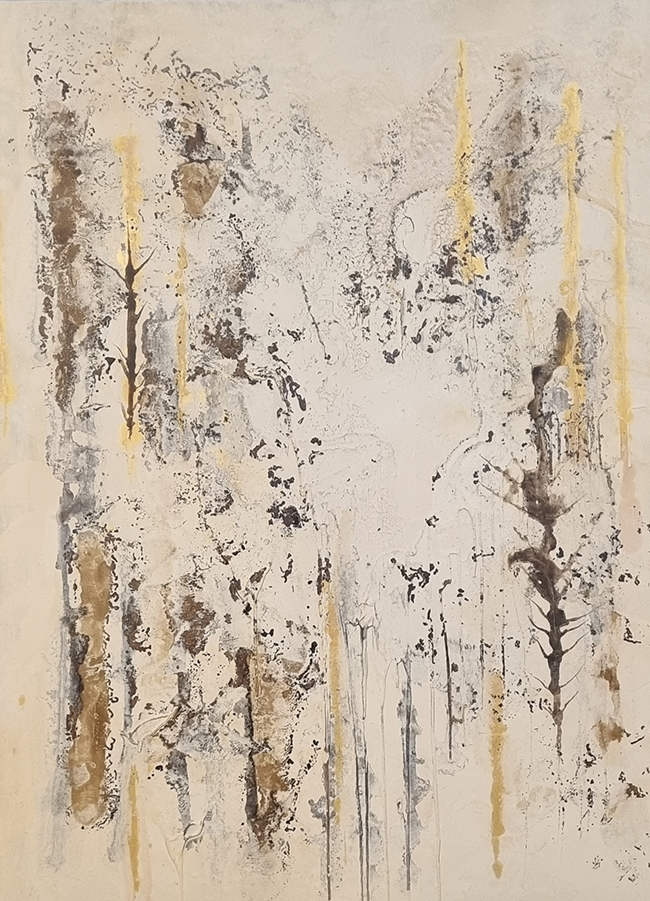
Visually, the work navigates between abstraction and surrealism, leaning into texture as a carrier of meaning. Barr’s surfaces feel visceral, layered, and worked—inviting the viewer to sense rather than decode. Earthy browns, deep blacks, muted whites, and ash-like tones dominate the palette. These restrained colors suggest soil, smoke, bone, and stone—materials that feel ancient, worn, and enduring. Nothing appears decorative or polished; instead, each mark carries weight, as if time itself has pressed into the surface.
Splatters, scratches, and dense passages of paint function almost like archaeological traces. They hint at remnants uncovered rather than images constructed. The diptych format reinforces this sense of dialogue: two panels speaking to one another across space, echoing cycles of decay and return. The work does not dictate a single reading but creates room for stillness, allowing viewers to bring their own reflections on impermanence and continuity.
Underlying the series is a philosophical thread that runs quietly but persistently. Barr reflects on the brevity of human presence—our limited time inhabiting physical form. He frames existence as momentary, suggesting that we pass through the material world only briefly before dissolving into something less defined. In this view, the body becomes temporary matter, destined for smoke and ash, while consciousness or spirit continues beyond known dimensions. This idea is not presented as doctrine but as contemplation—an open-ended thought shaped by observation rather than certainty.
Regeneration Diptych ultimately operates as a space for pause. It asks viewers to consider their relationship with the natural world not as separate observers, but as participants in the same cycles of formation, erosion, and renewal. Barr does not offer resolution or comfort; instead, he offers awareness. The work stands as a reminder that transformation is constant, that endings and beginnings are often inseparable, and that within destruction lies the quiet possibility of return.
