

Cynthia Karalla, an American artist, brings together activism, experimentation, and a refreshingly direct voice. She started her creative life studying architecture before turning fully toward photography and later fine arts. This background sits quietly inside her artwork—not as decoration or theory, but as structure, rhythm, and spatial thinking. Karalla has always challenged traditions. She treats art not as something untouchable or precious, but as a working practice built from risk, material honesty, and an ability to turn what looks like damage into something meaningful. Her approach mirrors photography’s darkroom language: negatives become positives, exposure becomes clarity. She embraces flaws, pulls light out of shadow, and searches for truth in the everyday. Karalla’s art does not ask for polite admiration—it demands attention. It aims to speak, to disrupt, and to stand as evidence that transformation is possible when we look past the surface.
Studio vs. Gallery
Cynthia Karalla recently presented Transformation – Alchemy in the Everyday in Chelsea, New York. The show opened to a strong reception, drawing more than five hundred visitors. The exhibition proved successful in its reach and response, but it also revealed something deeper about Karalla’s artistic identity: her work grows more powerful when people encounter it in the intimate setting of her studio. In a gallery, viewers saw her art. In the studio, they understood it.
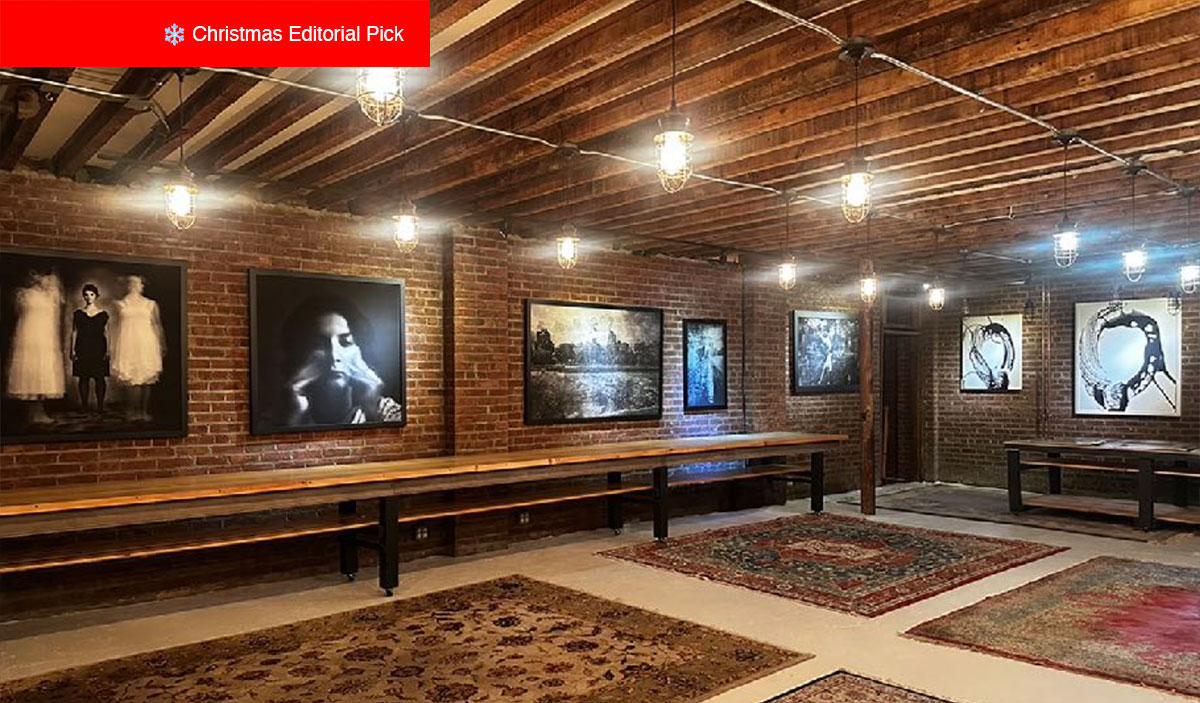
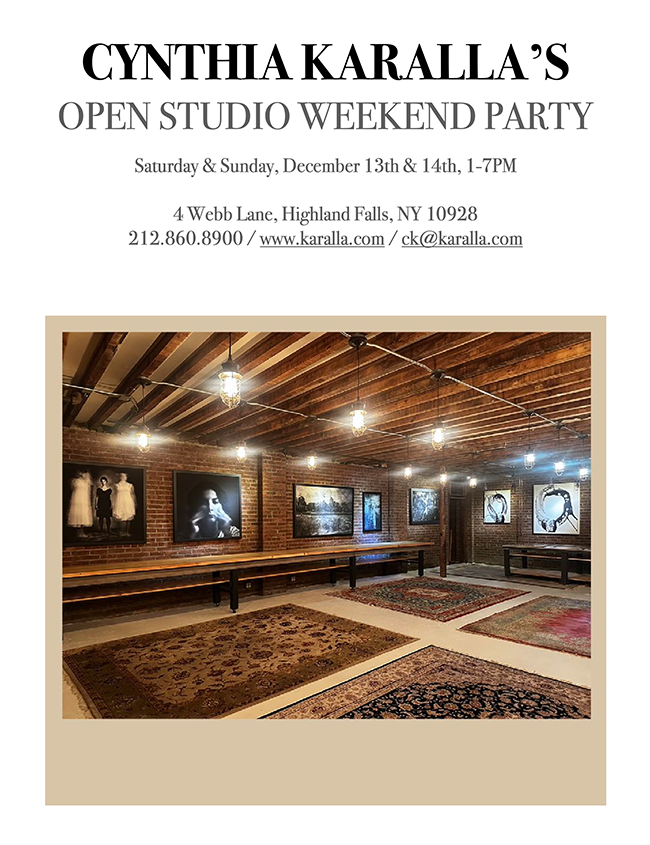
Karalla speaks openly about this divide. A gallery space offers visibility, social proof, and the welcome hum of activity. It is where work stands in public, framed by white walls and short conversations. Visitors move quickly, and their eyes must do the work their time does not allow. In a studio, the pace changes. The physical proximity to unfinished work, material experiments, notes pinned to walls, shelves of prints, and scraps of ideas turns viewing into a fuller experience.
For Karalla, this distinction matters because her work thrives on context. The pieces from Transformation – Alchemy in the Everyday are not simple images to be glanced at. They sit on the line between abstraction and documentation. They ask the viewer to consider how ordinary objects, places, and gestures can shift meaning through repetition, alteration, or new framing. In a crowded gallery opening, this message can blur beneath chatter and time limits. When collectors later visited her studio, they saw something else entirely: the work breathing.
Karalla describes the studio as a place where intention becomes visible. You see the slow months of experimentation that led to a final form. You notice shifts in scale, tone, and texture. You realize the decisions are not decorative—they are structural. The artwork isn’t just an object on the wall. It becomes part of an ongoing conversation between artist and viewer. It has memory, conflict, humor, and questions.
Underlying this experience is an important truth about collecting art in today’s world. There are buyers who chase trends, movements, and rising prices. They want the comfort of knowing the market has validated their choices. Karalla does not create for that group. She speaks to those who collect because a work hits something internal—something emotional, intellectual, or personal. She looks toward collectors who are willing to sit with the work, live with it, and allow it to affect their thinking over time.
Karalla says the value of her art does not rely on scarcity or eventual absence. Instead, it comes from presence. Her works are alive in real time, responding to light, attention, and interaction. She wants viewers to return again and again, noticing new layers rather than closing the book after a first glance.
That approach creates a different idea of ownership. Collecting becomes participation. It is not just about purchasing a canvas or photograph; it is about sustaining the life of the work, the research behind it, and the artist who made it. Karalla sees collectors as companions within a shared project. She believes the studio space reveals how personal this process is.
Inside the studio, people see the rough edges, the humor, the failures, and the sparks of progress that lead to completed pieces. They listen to the stories that shaped the work—why a certain shape repeats, how a color choice evolved, or what political or personal memory drove the composition. This environment cannot be replicated in a gallery. The gallery shows results. The studio shows reasons.
This difference frames Karalla’s understanding of what art truly asks from its viewers. The gallery provides exposure, but the studio gives depth. One delivers a surface reading; the other offers insight into the artist’s mind.
Karalla invites collectors to step into that deeper space—not for exclusivity, but for meaning. She wants them to experience a direct connection with the work rather than rely on labels, trends, or market noise. In a world where art can feel detached and transactional, she insists on authenticity.
Her studio becomes a setting for genuine dialogue, not decoration. It is a place where viewers can linger, question, and form connections that last beyond opening night excitement.
For those who collect with intention, this studio experience is not a barrier or a step backward. It is an entryway. This is where the work can be fully seen.
This is where the conversation begins.
