
Born in 1950, Huang YI Min grew up during one of the most turbulent and transformative periods in modern Chinese history. The social atmosphere surrounding her childhood and early adulthood became inseparable from the way she later approached painting. For Huang, art is not simply about recording appearances or reproducing the visible world. Instead, it becomes a place where memory, personal reflection, history, and imagination coexist. The experiences she witnessed during years of rapid political and cultural change left a lasting imprint on her understanding of identity, space, and emotional expression.
Over time, Huang developed an artistic language shaped by both observation and introspection. The environments she lived in, from crowded urban streets to historically charged locations, became part of her internal landscape. Rather than separating the personal from the collective, she allows the two to overlap naturally within her work. Her paintings often carry a quiet tension between reality and recollection, where familiar scenes are transformed through emotion and symbolic meaning. This layered approach gives her work a sense of depth that feels both intimate and historically aware.
Huang’s paintings reveal an artist interested not only in visual structure, but also in the emotional atmosphere surrounding a place. Architecture, objects, and figures become carriers of memory rather than static subjects. Through mixed media techniques and expressive compositions, she creates works that move beyond documentation and into psychological territory. Her art reflects a lifelong process of examining how the past continues to shape the present, both socially and personally.
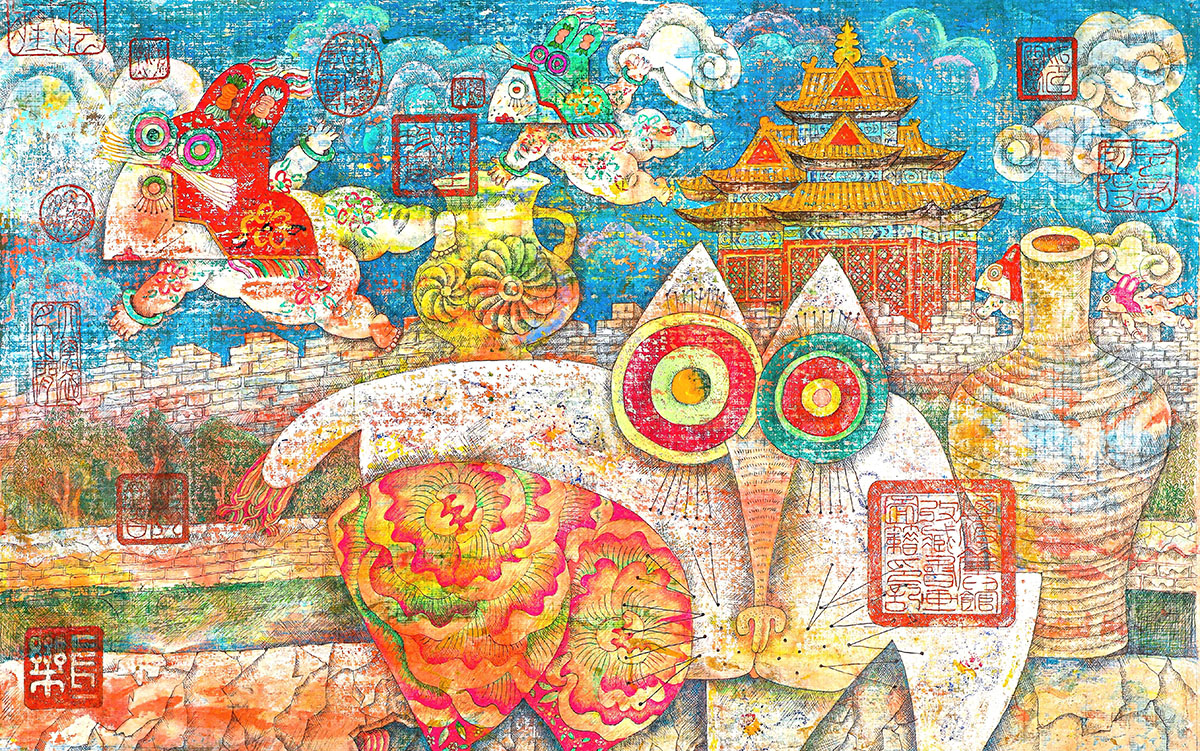
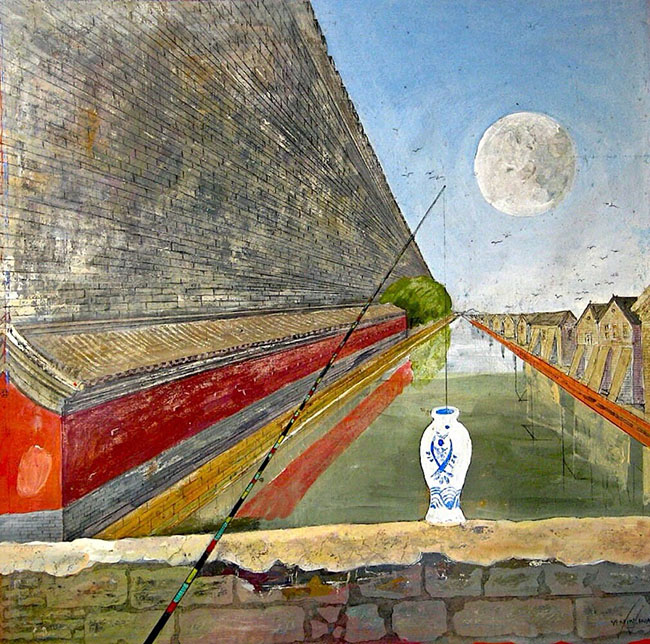
One of Huang’s most compelling bodies of work is her series Forbidden City Freedom. In these paintings, she explores the meeting point between imperial history and ordinary daily life. The series places the grandeur of the Forbidden City alongside the reality of common residential spaces, creating a dialogue between power and humanity, authority and everyday existence. Rather than presenting history as something distant or untouchable, Huang folds it directly into the lives of ordinary people.
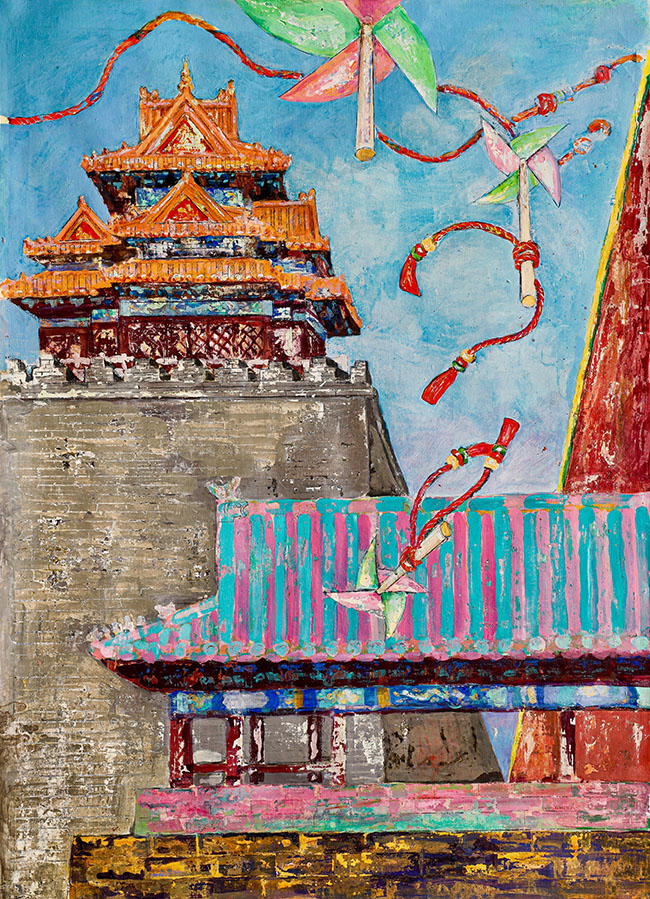
The contrast within the series is central to its meaning. The Forbidden City traditionally symbolizes hierarchy, control, and imperial order. Huang juxtaposes this historical monument with modest living environments, suggesting that history is never isolated from the people who exist around it. Through this interaction, she questions the boundaries between official narratives and lived experience. The emperors who once occupied these monumental spaces become inseparable from the countless anonymous lives unfolding nearby.
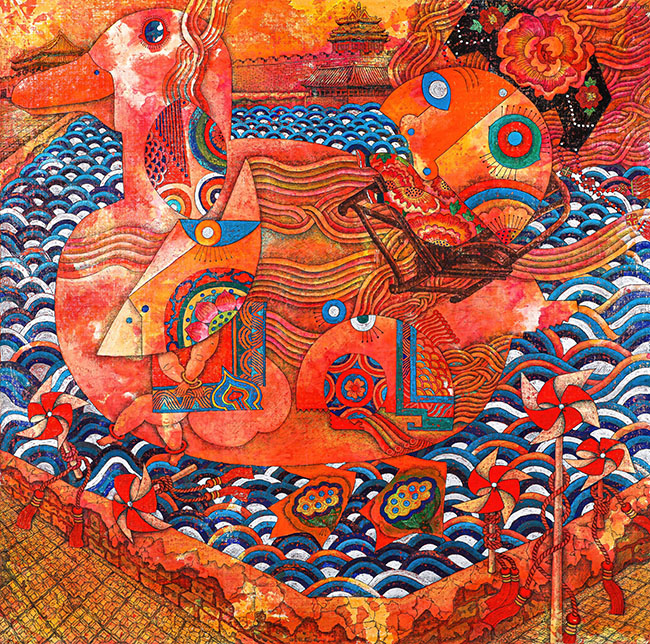
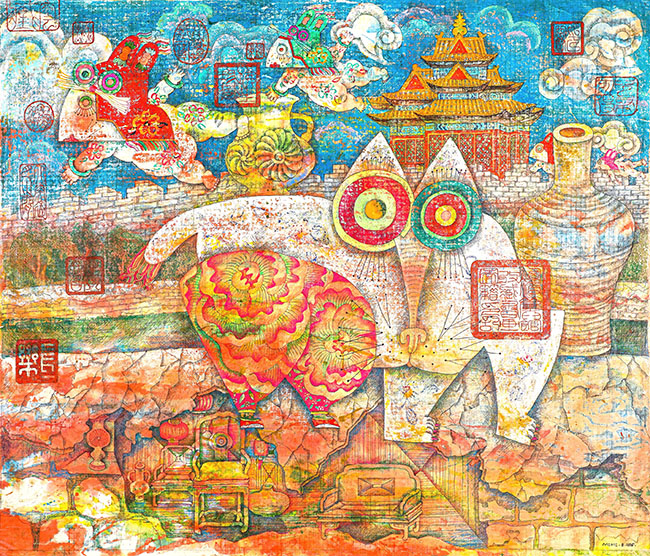
The paintings themselves carry an atmosphere that feels both reflective and unsettled. Huang uses layered textures and mixed materials to create surfaces filled with movement and complexity. Rather than striving for polished perfection, the works retain traces of spontaneity and emotional immediacy. Fragments of architectural forms emerge and dissolve across the canvas, as though memory itself is shifting and unstable. This approach reinforces the idea that history is not fixed, but constantly reinterpreted through personal experience.
In Forbidden City Freedom, scale also plays an important role. The larger canvases create an immersive presence, allowing viewers to feel surrounded by overlapping histories and emotional tensions. Huang’s use of mixed media contributes to the layered quality of the work, blending painting, texture, and abstraction into compositions that feel both physical and psychological. The surfaces often appear weathered, echoing the passage of time and the accumulation of memory.
At the same time, there is a sense of quiet humanity throughout the series. Even when figures are absent, traces of ordinary life remain embedded in the work. Chairs, windows, rooftops, and fragmented domestic elements suggest lives unfolding beneath the weight of history. Huang does not romanticize either the imperial past or contemporary reality. Instead, she presents both as interconnected parts of a larger human experience.
The emotional tone of the series shifts between nostalgia, contemplation, and subtle resistance. By placing ordinary residences beside one of the most symbolic locations in Chinese history, Huang reclaims space for individual memory within larger historical narratives. The paintings become less about monuments themselves and more about the people who continue living in their shadow.
Through these works, Huang YI Min continues to explore the relationship between memory and place, revealing how history quietly survives within everyday environments. Her paintings invite viewers to consider how personal lives exist alongside political and cultural structures, and how the past continues to shape emotional experience long after historical moments have passed.
