
L. Scooter Morris creates artworks that demand more than a quick glance. Her practice pushes beyond the boundaries of traditional painting, transforming the canvas into something dimensional, immersive, and physically engaging. Through layered acrylic, applied canvas, and mixed media, Morris builds what she describes as “Sculpted Paintings®,” surfaces that shift with movement, light, and perspective. Texture, reflection, shadow, and depth become active elements within the work, allowing each piece to change depending on where the viewer stands and how they experience the space around it.
Rather than focusing on technical perfection alone, Morris is interested in sensation and emotional response. Her work encourages viewers to slow down, become present, and experience the artwork physically before attempting to interpret it intellectually. Existing somewhere between painting, sculpture, and illusion, her pieces create a direct encounter between object and observer.
The Immersive Language of Sculpted Paintings®
For over two decades, Morris has developed a visual language rooted in movement, perception, and emotional engagement. Her Sculpted Paintings® refuse to remain static. As light travels across their surfaces and viewers shift position, the artworks appear to transform in real time. The result is an experience that feels alive rather than fixed.
Using layered materials and dimensional construction, Morris creates surfaces that blur the line between image and object. Her work explores illusion not as deception, but as a way of questioning how people perceive reality itself. Themes of freedom, memory, truth, and collective human experience remain central throughout her practice, inviting viewers into a deeper sensory and emotional connection with the work.
TIPPING POINT – THE FILM PHENOMENON
A Cinematic Reflection on Society, Memory, and Collective Responsibility
With TIPPING POINT – THE FILM PHENOMENON, Morris expands her creative practice into film while continuing many of the ideas that define her visual art. The project examines social division, environmental destruction, historical repetition, and the growing instability shaping contemporary life. Rather than presenting these issues as isolated events, Morris approaches them as symptoms of a larger human pattern that continues to repeat itself throughout history.
At the center of the film is the belief that society has reached a moment of critical urgency. Morris repeatedly returns to the phrase “We are the people,” reinforcing the idea that responsibility belongs collectively rather than resting in the hands of institutions or singular leaders. The project challenges the notion that change will arrive from elsewhere. Instead, it suggests that transformation begins when ordinary people recognize the seriousness of the moment and decide to act together.
This collective perspective runs throughout the film. Morris speaks about reclaiming “the beauty of our land” while confronting the cultural, emotional, and spiritual losses created through division and neglect. The work carries both emotional vulnerability and confrontation, asking viewers to acknowledge what is disappearing while also recognizing their own role within that process. Hope, in Morris’s view, is not passive optimism but something tied directly to action and awareness.
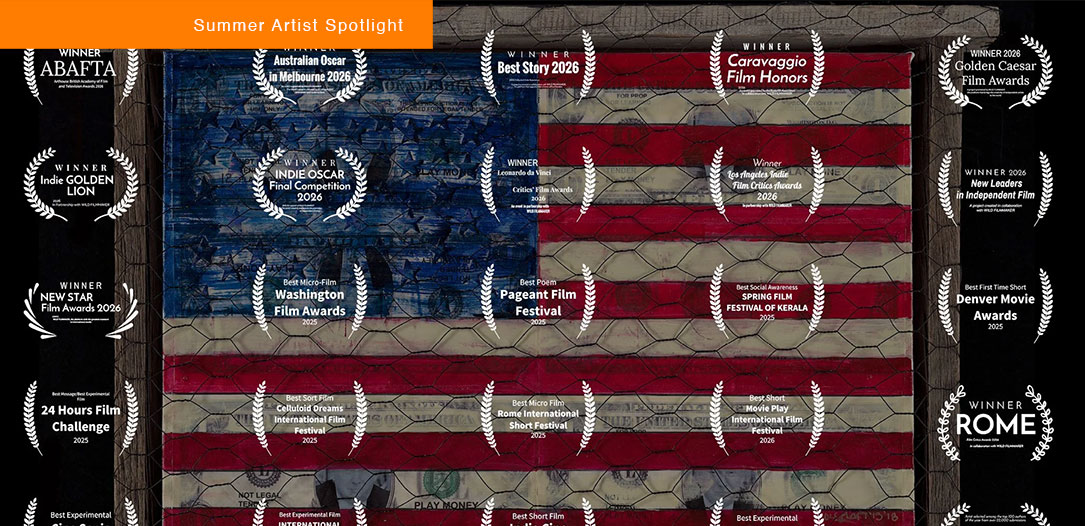
The visual language of TIPPING POINT grows directly from Morris’s Sculpted Paintings®. Many of the artworks connected to the project contain embedded historical American documents physically integrated into their surfaces. These materials are not decorative references but structural components within the artwork itself, mirroring how historical principles and national identity become embedded within collective memory.
This relationship between material and meaning has long shaped Morris’s artistic philosophy. Her work often operates between realism and emotional experience, creating imagery designed to resonate instinctively while carrying deeper political and historical layers beneath the surface. That same approach appears throughout the film, where atmosphere, symbolism, movement, and visual tension become tools for emotional storytelling rather than strict realism.
Morris’s background in dimensional mixed media naturally informs the cinematic identity of the project. Her layered surfaces, shifting perspectives, and sensory environments translate seamlessly into film, where motion, texture, light, and scale intensify emotional impact. The visual experience becomes inseparable from the message itself.
What separates TIPPING POINT from straightforward political commentary is Morris’s refusal to divide beauty from meaning. She believes emotionally charged imagery can communicate difficult truths more deeply than direct confrontation alone. Across painting, film, fashion, and object design, she continues pursuing the same goal: creating work that connects emotionally while confronting larger human realities.
The film also continues Morris’s long-standing interest in shared human experience. Rather than focusing solely on politics in a conventional sense, TIPPING POINT examines broader questions surrounding identity, survival, memory, and collective responsibility. The repeated use of “we” throughout the project reinforces the idea that this historical moment belongs to everyone living through it together.
In many ways, the film feels like an extension of her studio practice. Just as her Sculpted Paintings® invite active participation instead of passive observation, TIPPING POINT uses cinematic immersion to create urgency, reflection, and emotional connection.
At its core, the project asks a direct question: what happens when people finally realize they can no longer wait for someone else to repair the world around them? Morris’s response remains clear throughout the work. The people capable of creating change are already here.
